Keynote Speakers
Date: 11th December 2023 (Keynote 1 & 2), 12th December 2023 (Keynote 3)
Venue: Concorde 1, Concorde Hotel, KL
| Next Generation Multiple Access: Fluid Antenna Multiple Access for 6G | Ultra-reliable low latency communication (URLLC) for 5G and Beyond | IOT MEETS FORESTRY–Technology-based Peatland Management |
 |
 |
 |
| Keynote 1: | Keynote 2: | Keynote 3: |
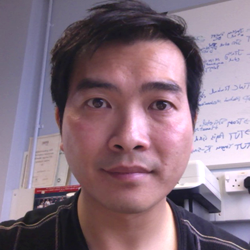
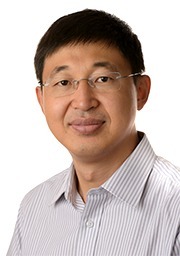
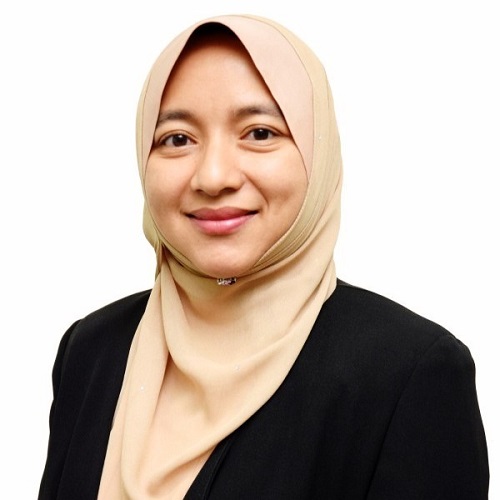
| Prof Kai Kit Wong, University College London | Prof. Yonghui Li, The University of Sydney | Prof. Ir. Dr. Aduwati Sali, Universiti Putra Malaysia |
| Prof. Kai-Kit Wong received the BEng, the MPhil, and the PhD degrees, all in Electrical and Electronic Engineering, from the Hong Kong University of Science and Technology, Hong Kong, in 1996, 1998, and 2001, respectively. He is Chair Professor of Wireless Communications at the Department of Electronic and Electrical Engineering, University College London, UK. His current research centers around 5G and beyond mobile communications. He is a co-recipient of the 2020 Premium Award for Best Paper in IET Electronics Letters, the 2013 IEEE Signal Processing Letters Best Paper Award, the 2000 IEEE VTS Japan Chapter Award at the IEEE Vehicular Technology Conference in Japan in 2000, and a few other international best paper awards. He is one of the early researchers who proposed multiuser MIMO. His first paper on multiuser MIMO was published in WCNC 2000 which appeared to be the first ever research paper on this topic. He is Fellow of IEEE and IET. He is the Editor-in-Chief for IEEE Wireless Communications Letters since 2020, and also the Subject Editor-in-Chief for Wireless Communications of IET Electronics Letters since June 2020. | Prof. Yonghui Li (Fellow, IEEE) is currently a Professor with the School of Electrical and Information Engineering, The University of Sydney. His current research interests are in the area of wireless communications, with particular focus on MIMO, millimeter-wave communications, ultra-reliable and low latency communications, machine-to-machine communications, coding techniques, wireless AI and industrial IoT. He received the prestigious Australia Research Council (ARC) Queen Elizabeth II Fellowship in 2008 and the ARC Future Fellowship in 2012. He was an Editor of the IEEE Transactions on Communications and the IEEE Transactions on Vehicular Technology. He has been on the organizing committees of several international conferences and a Guest Editor of several special issues of prestigious IEEE journals, such as IEEE JSAC, IEEE Communications Magazine, IEEE IoT Journals, and IEEE TII. He received Best Paper Awards from the 2014 IEEE ICC, 2017 IEEE PIMRC and 2014 IEEE Wireless Days Conferences. | Aduwati Sali (Senior Member, IEEE) has been a Professor at the Department of Computer and Communication Systems, Faculty of Engineering, UPM, since February 2019. She is also a Chartered Engineer (C.Eng.) registered under the U.K. Engineering Council and a Professional Engineer (P.Eng.) under the Board of Engineers Malaysia (BEM). She is involved with IEEE as the Chair to ComSoc/VTS Malaysia (2017 and 2018) and Young Professionals (YP) (2015); and the Young Scientists Network-Academy. |
| ABSTRACT: “Be formless … shapeless, like water!”, which were the words used by Bruce Lee, as he was revealing the philosophy of Jeet Kune Do, the martial arts system Lee founded in 1967. Many parallels can be drawn in wireless communications technologies where engineers have been seeking greater flexibility in using the spectral and energy resources for improving network performance. In this talk, I will speak on a novel antenna technology, referred to as fluid antenna, that adopts a software-controlled, position-flexible antenna to operate on the best signal envelope within a given space. This talk presents some early results on fluid antenna systems, and how this may contribute to next generation multiple access. | The world is currently witnessing the rise of many mission critical applications such as tele-surgery, intelligent transportation, industry automation, virtual reality and augmented reality, vehicular communications, etc. Some of these applications will be enabled by the fifth-generation of cellular networks (5G), which will provide the required ultra-reliable low latency communication (URLLC). However, guaranteeing these stringent reliability and end-to-end latency requirements continues to prove to be quite challenging, due to the significant shift in paradigms required in both theoretical fundamentals of wireless communications as well as design principles. In particular, a holistic framework that takes into account latency, reliability, availability, scalability, and decision-making under uncertainty is lacking. Addressing these challenges requires the development of new wireless technologies, underlying network protocols, and signal processing techniques. In this talk, we will present the key challenges and potential solutions for 5G and beyond 5G to support URLLC, in terms of error control coding improving reliability, channel access protocols for reducing latency, and multi-connectivity for improving network availability. | Peatland is important to rural communities’ livelihood due to its potential for aquaculture and agriculture. Nonetheless, human activities such as slash-and-burn can greatly increase forest fire risk, which can release a great amount of greenhouse gases and carbon dioxide into the atmosphere. To sustainably manage and restore peatlands, the Internet of Things (IoT) system can incorporate with Cyber-Physical System (CPS) for peatland management. In this study, an IoT system is deployed in the peatland to monitor the ground water level (GWL) and upload it to the server for the machine learning (ML) process. The trend of GWL will be modelled, and the CPS using the developed ML model will control the peatland rewatering process. Apart from the actuation process, the predicted GWL is also profiled in Fire Danger Rating System (FDRS) indices, such as Drought Code (DC), Duff Moisture Code (DMC) and Fire Weather Index (FWI). As a result, the peatland condition can be monitored by the stakeholders and alerted to the public in realtime. Hence, the risk of potential forest fires can be mitigated through rewatering process before the GWL drops to a critical level and the area becomes susceptible to fire. |
Industry Forum
Date: 11th December 2023
Time: 11.45AM – 1.00PM
Venue: Concorde 1, Concorde Hotel, KL
| Moderator Assoc. Prof. Dr. Rudzidatul Akmam Bt Dziyauddin |
Panel 1 Ts. Juliana Binti Johari HeiTech Padu Berhad |
| Panel 2 Mr. Ahmad Faez Bahari YTL Communiations Sdn. Bhd. |
|
| Panel 3 Mr. Yeoh Chun Yeow Telekom R&D Sdn. Bhd. |
|
| Panel 4 Mr. Muhammad Izzat Emir Rosni Malaysian Communications and Multimedia Commission |